Tuesday, 7 May 2013

The National Portrait Gallery Review, London


The National Portrait Gallery Review, London
            Adjoining the National Gallery, the National Portrait Gallery in London is an art museum dedicated to housing portraits of famous and important British people. The portraits are selected based on the merit of the person being painted, not the artist. Although not all of the portraits here are exceptional artistically, they offer us the chance to see important people from Britain's past who never lived in the age of the camera. In addition, each artist has a different perspective of the subject and is able to bring out the beauty that they see in each individual subject. Since the gallery is so close to the National Gallery, I'd recommend stopping by here if you were already planning on going to the National Gallery. Although the National Portrait Gallery is smaller than the nearby museum of western art, it still offers much to see, especially for those who have a keen interest in the human subject.
National Portrait Gallery, London

            The ground floor of the museum houses the Gallery's collection of modern portraits and commissions. Here you can see portraits of some of the isle's most famous living people, including actors like Judi Dench and Timothy Spall, performers such as David Bowie and Amy Winehouse, and of course British Royalty like Prince Harry. Some of the portraits I recommend that you check out include Bowie's, Dame Maggie Smith's, and the video portrait of David Beckham. Bowie's portrait, by the painter Stephen Finer, is an abstract oil on canvas that really captures the essence of David Bowie, who is ever the enigmatic man. Finer paints his subjects by allowing the paint on his canvas to accumulate over time, after which he continues to work and re-work the paint into an image that he feels is fitting of his subject. Here, the splotches of paint form an image of Bowie that is at once him, but at the same time disconnected and almost puzzling to view. It is a truly interesting piece that will hold your eye for quite some time. On the other hand, the portrait of Dame Maggie Smith is a clear and distinct image that captures the regal woman in a relaxed pose. Smith, known for playing stern characters like Professor McGonagall on the screen, here appears frank and familiar in contrast to her acting persona. The video portrait of David Beckham, by Sam Taylor-Wood, is an intimate portrait of the world famous athlete. Shown sleeping in Madrid after a training session, Beckham appears vulnerable while retaining the physical beauty that he is perhaps more known for nowadays. Lastly, you should check out the much criticized portrait of Catherine, Duchess of Cambridge that now hangs in the same room. The portrait has been criticized for making Catherine appear old and tired, and failing to capture her beauty and youthfulness. The painter, Paul Emsley, argues that his portrait captures her sense of warmth and that it has been panned because it is an image of her that is so unexpected. Whatever you may think, I suggest you see it in person if you have the opportunity before you make a final judgment.
The Duchess of Cambridge

            The first floor of the Gallery focuses on portraits from the Victorian-era to more early-modern times. In addition to the Queen and members of her royal court, the opening room of the first floor also houses paintings and busts of other important people from the time, including the archaeologist Sir Charles Thomas Newton, the famous scientist Charles Darwin, and the cardinal and theologian John Newman. The most notable portraits in this room of course are of Queen Victoria herself, and of her husband Prince Albert. The portrait of the young Queen, captures her on the day of her coronation, when she inherited the throne at the age of 18. The painter, Sir George Hayter, sought to capture some of the idealism of Victoria in the portrait here. The portrait of her husband, Prince Albert, is a beautiful painting that captures the Prince in a regal pose of authority that contrasts with the apparently messy background (albeit a still lavish one) he stands in front of. The remainder of the floor focuses less on royalty, so for those who wish to see portraits of kings and queens you should make your way up to the second floor.
Charles Darwin

            The second floor begins with a chronological sequence of British royalty, beginning with a few early medieval kings and the Tudor dynasty, and ending with the Stuarts. Five statues of the English Kings Edward II, Edward III, Edward Prince of Wales, Richard II, and Henry IV grace the entrance to room one of this floor. As you move into the next room, you will be able to view the portraits of many of England's kings and queens from this time period, as well as many important members of the royal court. One portrait of King Edward VI, painted when he was nine, is painted in distorted perspective. When you look at it head on it appears squished and compact, but if you look at it from the right (a hole in the glass will guide you) it appears in the proper perspective. This is the floor I recommend spending the most time on, as it is so well laid out and many of the portraits are beautiful and of very notable people with interesting stories (many of the side notes that accompany the portraits end with “they were executed” in some manner). Some of the portraits you must see are of Queen Elizabeth I and Charles II (for the sheer scope alone) and of course the most famous portrait of William Shakespeare. Hanging in room 4, this is the only portrait of the legendary bard that has any claim to have been painted from life. Interestingly enough, there is even some uncertainty regarding whether or not this painting is of the playwright, although the common consensus is that it is. Overall, while the museum as a whole offers many images for you to see, I found the second floor to be the highlight of the National Portrait Gallery. If you are in the mood for some art, spend a day at the National Gallery and the National Portrait Gallery as well.

            -By Phillip Storm, Arts Correspondent, VisitMusuems.com

Thursday, 2 May 2013

National Gallery of Art in London Review


National Gallery of Art in London Review

National Gallery of Art, London


            The National Gallery, located at the heart of Trafalgar Square, is one of England's most notable museums of western art. The museum is home to a collection of over 2,300 paintings that hail from the mid-13th century to the early 20th century. You can view the work of many famous artists from this time span in this museum, including some of the giants of the Renaissance like Da Vinci, Michelangelo, and Raphael, as well as some of the most famous impressionist artists like VanGogh, Monet, and Cézanne. The museum itself is designed in a grand manner and both the exterior and the interiors of the museum match the beauty of the paintings hanging on the walls. The museum is designed in a way that is easy to navigate, with the paintings being separated by country of origin, specific artists (such as Van Gogh and Cézanne), or by painting style such as impressionist or Dutch art.
Sunflowers, Van Gogh, National Gallery, London

            Upon entering the museum you will be greeted by a painting from the Queen's own collection, Cimabue's Celebrated Madonna. The oil painting, by the English artist Frederic Leighton, is a prime example of how painters can use composition and symmetry to create a beautiful piece of art. Notice how all the people are framed in the piece and centered around the man in white. Also worth noting is the dome ceiling that you stand under when you enter the building; this in combination with the staircases that move out in four different directions create a regal mood that is fitting for the NationalGallery. I recommend heading to room 45 first to see the museum's collection of paintings by Cézanne, Van Gogh, Gauguin, and Rousseau. Cézanne, whose work was said to bridge the gap between late 18th century impressionism and early 19th century cubism, has a number of paintings in this room that you should see. These include two different self-portraits (which show him with varying beard lengths), one of his still life paintings (Still Life With Water Jug), and of course his most famous work which dominates the center of his wall, Bathers (Les Grandes Baigneuses). The painting is one of a series of works by Cézanne which feature abstract nude women bathing against a background. This version is perhaps his most abstract as the background against which the women are bathing cannot even be distinguished. The Van Gogh wall is always crowded, and rightly so, as you will be able to see some of his works like Sunflowers, Van Gogh's Chair, and A Wheatfield, With Cypresses. A Wheatfield is perhaps my favorite of the Van Gogh paintings here, as it really reflects his ability to portray a landscape in a way that is entirely unrealistic while at the same time retaining a sense of humanity and beauty that only he could imagine. Interestingly enough, it was painted near the end of his life when he was a patient at the Saint-Rémy mental asylum near Arles, France. After you check out this room, you should head over to nearby room 43 where you can see some more impressionist art, including some famous works by Manet and Monet.
Bathers, Cezanne, National Gallery, London

            This room illustrates the difference in art style between the two French impressionist painters. Whereas Manet's paintings often feature human subjects, Monet's works here instead depict beautiful landscapes and images from nature. For Manet fans, you should see The Execution of Maximilian and Corner of a Café-Concert, while Monet fans can see a number of his masterpieces, including Snowat Argenteuil and The Water-Lily Pond. Both paintings are a part of a collection of works by Monet depicting the same subject. The former, is the largest of his paintings which show his home commune of Argenteuil, France under a blanket of snow, while the latter is one of 250 paintings by Monet that depicted his flower garden and dominated the end part of his artistic output. There are of course many other fine paintings to see in this room, including a couple pieces by the master Pierre-Auguste Renoir!
            There is so much beautiful art in this museum that in order to fully appreciate it you would have to make multiple trips here. In every room there is a masterpiece by a famous artist, and you are bound to find multiple paintings that will catch your eye and hold your gaze. For those who can't afford to spend the whole day here, I would recommend that you also check out the museum's small collection of works by Michelangelo and Da Vinci, including The Entombment and The Virgin of the Rocks. In addition, the museum houses an excellent and in-depth gallery of works by Rembrandt and other famous Dutch painters that spans multiple rooms. However, for those with a keen interest in art this is a museum that you should definitely plan on spending the whole day getting lost in.
            -By Phillip Storm, Arts Correspondent, VisitMuseums.com

Wednesday, 1 May 2013

George Bellows (1882-1925) Modern American Life Art Exhibition – Royal Academy, London


George Bellows (1882-1925) Modern American Life – Royal Academy, London – 16th March to 9th June 2013.

            The Royal Academy is hosting an important retrospective of the renowned American Modern artist, George Bellows. It is the first museum in the United Kingdom to display his work and includes all the focal and brilliant paintings that were part of his repertoire. Bellows was energetic, talented and one of the most influential painters of his time. His gritty, dark and intense depictions of New York City demonstrate that he was one of the greatest realist painters of his century.
Royal Academy, London

            Born in Ohio in 1882, Bellows moved to New York in 1904 and joined the New York school of Art where he studied with fellow artists such as Edward Hopper. There he met his soon to be wife and muse Emma Storey and  fell under the influence of his teacher Robert Henri. Both were to have a profound impact on his life and vision. Henri urged his students to move beyond the genteel scene that was favoured by the National Academy of Design and instead to experiment with other formats and subject matters. In response Bellows created powerful and emotional drawings and paintings depicting New York’s poor immigrant population. He was particularly drawn to the children who lived in the Tenements; in impoverished and harsh environments. “Tin Can Bottle, San Juan Hill, New York” is one such painting where he evocatively depicts gangs of unruly boys playing in the streets. Both their unbridled energy and the poverty that surrounded them is clear and Bellows uses lively brushstrokes and complex multi figure compositions. One of his most recognised and famous paintings which uses the same subject is his large canvas “Forty Two kids”. Here we see a collection of mainly thin boys, all in various stages of undress, swimming and jumping in the polluted river. Bellows not only painted groups but was also a talented portraitist. One of the most powerful paintings for me is his ‘Nude Girls– Miss Leslie Hall’. Here he captures both her vulnerability and her street sense; the detail of her leg muscles is remarkable as is her direct languid and tired gaze. The dark sombre background that seems to be invading her cleverly gives the impression of a hard life. Bellows is quite clearly repudiating the academic idealisation that was popular at the time.
Nude Girl - Miss Leslie Hall, 1909, George Bellows

            His talented ability to portray crowds and the faceless soul of the city is outstanding. In his grand painting, “New York” we see the all encompassing heart of New York  with its teeming crowds, high skyscrapers, horse drawn carts and so on. Specific landmarks are combined with generic details and the people are dwarfed by the immense buildings and noise of the great city. The nowhere and everywhere  quality of New York can be felt and we see how Bellows is simultaneously an abstract and realist artist.  Another of his preoccupations was the clandestine world of wrestling. At the time public fighting was outlawed so private clubs would circumvent the state ban and organise brutal fights behind closed doors.  Bellows’ outstanding “Stag at Sharkeys” is his signature masterpiece. Here the incredible power of the human body as the two fighters contort themselves and pit themselves against each other is poignant. One can almost feel and smell the sweat and the blood and hear the shouts of the audience. The red, white and pink of the flesh is gory and compete with the delighted and intense expressions of the crowds watching. Bellows was always experimenting with art and the naked human body was one of the forms he wanted to master as well as the underlying theme of human violence.

Stag at Sharkeys, George Bellows

            Intermingled with these various landscapes of city life are beautiful, poetic paintings that celebrate life and society. One such is Bellows’ depiction of a rainy and wet landscape in “Rain on River” and a small painting entitled “The Big Dory” where we see a picture of a rocky beach on which nine men heave a beautifully painted fishing boat into the water. There are details such as the blue hill in the background and the stormy sky but centre stage is the boat which spans almost the whole painting. Here we have working men in the beauty of natural landscape. Similarly evocative is his painting depicting well to do “New Yorkers in Central Park” where the colours and joyful aspect of the people are recorded. Moreover the mood of the exhibition changes greatly in the last room of the exhibition as we see family paintings and portraits in his later years. One such is an eerily still portrait of his wife, Emma Storey, in a stunning deep blue gown in “Emma at the Piano”. Her gaze stares back at us in a hard to decipher gaze as if we are interrupting her and yet there is an intimacy between the muse and the painter that is almost tangible. He once said to her “Can I tell you that your heart is in me and your portrait is in all my work”. One of my favourite paintings in the whole collection painting “The Picnic” where we see Bellows and his family and friend enjoying a picnic on the shores of the lake in Woodstock; a rural art colony where they used to go to take their holidays. The colours are heightened and the mood is dreamlike and idylic evoking a peaceful and naturally beautiful haven. In this sense Bellows reveals the scope of his artistic range as we see how different these paintings are in comparison to his wrestlers or grimy, powerful city landscapes
Emma at the Piano, 1914, George Bellows

            The show is quite small and won’t take you long to finish and in it are great masterpieces and works of art evoking New York at its grittiest and society in all walks of life. Tragically Bellows died at the young age of 42 from peritonitis cutting short what was an amazing career and full life.

-         By Larissa Woolf, Arts Editor, VisitMuseums.com

Hotels in London for your visit


Monday, 29 April 2013

Visit to Victoria & Albert Museum, London, UK


Visit to Victoria & Albert Museum, London, UK
Victoria & Albert Museum, London
            The Victoria & Albert Museum is the world's largest museum of decorative arts and design, and is home to over 4.5 million objects from around the world. With galleries from antiquity to the present day that hail from North America, Europe, East and South Asia, and North Africa, the V&A can truly be called a museum that represents all of humanity.  Laid out in mostly chronological fashion, the V&A is easy to navigate and is organized by geographic location. The ground floor, which houses the majority of the museum's galleries, is where you should spend the bulk of your time during your visit.
Medieval and Renaissance Permanent Exhibition, V&A, London

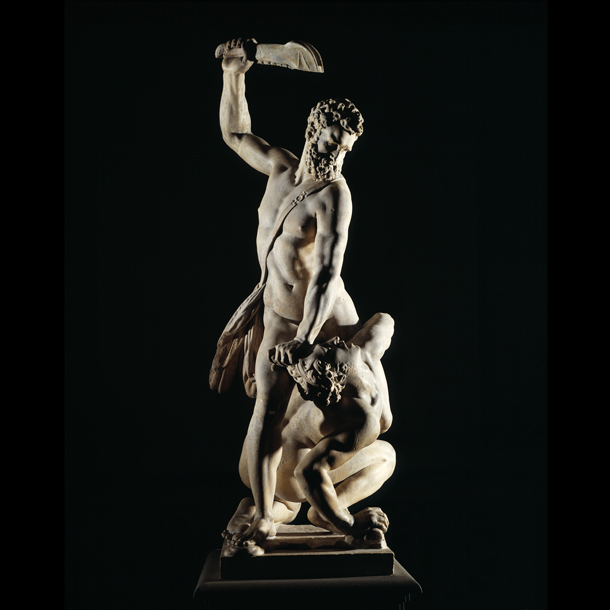
            When you first enter the museum, head to your right, you will see the museum's collection of medieval and Renaissance-era art from 1350-1600.  The first room houses marble statues, doorways, monuments, fountains, roundels, and other objects that highlight the explosion of artistic creativity that was burgeoning during that time and place. One of the highlights is the statue “Samson Slaying a Philistine” by Giovanni Bologna. Bologna, one of the most famous and influential sculptors of his day, made the piece for the powerful Francesco de' Medici. The following room features primarily religious art from the era, including some beautiful stain glass art, religious altar pieces, and a chancel taken from a church. The chancel was the most important area of the church, as Mass was celebrated there, and only members of the clergy or those directly involved in Mass could go near it. If you go a floor down, you can view the museum's collection of objects from Europe c. 300-1500.
Samson slaying a Philistine, Giovanni Bologna, V&A Museum, London

            Like most art from this time period, almost every object in these galleries is religious in some manner. However, that does not detract from the beauty of some of the items gathered here. Some items to see are early choir book pages, the intricately designed embroidered panels and tapestries, and the elaborate altar crosses which depict religious imagery and holy saints. One altar cross is very large in size and decorated with gold and it serves as a symbol of the church's power at the time. This gallery also houses some lavish embroidery used for high-ranking clergymen that were to be worn in church processions. One famous piece of embroidery is the Butler-Bowden Cape (c. 1330-1350) which is detailed with scenes from the life of the Virgin Mary, who is surrounded by apostles, saints, and pearl, glass, and metal details. For those who would like to try on some tunics from this era, there is a place where you can do just that. In the very same room is a photograph of a section of the famous Bayeux Tapestry, which depicts the events of the Norman invasion of England in 1066. Two other objects you need to see from this section are the reproduction of the World Map c. 1300 and the famous Boar and Bear Hunt Tapestry c. 1425-30. The map shows numerous events from the past, and although America and Australia are missing the map makers did know that the world was round, not flat. The tapestry, which hails from southern Netherlands, shows nobles hunting boars and bears, and the events of the hunt unfold from left to right. An interactive screen lets you learn all about the tapestry and the events within it, from hunting at the time to the unique fashion depicted in the tapestry to the way the tapestry itself was made.
Raphael Cartoons, V&A Museum, London
            Once you go back up to the ground floor, you should make your way to the Raphael Exhibit. The room houses the seven surviving prints of the original ten that comprised the Raphael Cartoons. Commissioned by Pope Leo X and painted by Raphael in 1515-1516, the cartoons were full-scale designs for tapestries that were meant to cover the lower walls of the Sistine Chapel. They are called cartoons as the word “cartoon” is derived from the Italian word “cartone,” meaning a large sheet of paper or a preparatory design. Aside from some minor color fade, the paintings remain in a remarkable state of preservation. The remainder of the floor is home to the museum's vast collections from East and South Asia. In the South Asian wing of the floor, I recommend that you see the large Bhairava Mask, which is an angry, vengeful manifestation of the god Shiva. Alcohol was poured into the mouth from the rear of the mask, as people from the time believed that drinking from the mask gave you blessings from the Gods. Other objects you should see in these galleries include the statues of the Hindu God Shiva Nataraja, Lord of the Dance and the large collection of carpets and hangings the museum has. The famous Ardabil Carpet, one of the largest and finest Islamic carpets in existence, adorns the floor of the museum. As you move from South Asia to East Asia, you will have the opportunity to check out many objects from the cultures of Thailand, China, Japan, and Korea. There are many beautiful objects to see here, including jars, furniture, fashion, sculptures, an imperial throne, and even some Samurai garb and weaponry.
Ardabil Carpet, V&A Museum, London
            Once you have adequately viewed the galleries on the ground floor, you should pay a visit to the first floor which focuses on objects from Britain and the rest of Europe. If you take the stairs up from the right side of the museum, you will be able to walk through a Roman/Renaissance style city walk that is contrasted by modern couches along the wall, allowing you a brief reprieve from all the walking you have been undoubtedly doing. In the first floor you will be able to see more art and designs from Renaissance-era Europe, including a collection of works from the famous sculptor Donatello. Also on the first floor is an exhibition dedicated solely to Britain from 1500-1700. The low lighting of this gallery immerses you in the art and high-class lifestyle from this time period. Some of the highlights here include a recreation of a regal, candle-lit room, and the recreation of a parlour room from 1727. Both of these rooms highlight how this gallery does such a good job of representing British culture and life from this time period, albeit with a sole focus on the upper class.
            Finally, you should make your way up to the second floor where you will see the museum's large collection of gold, silver, metalware, and ironworks. Designed by Sir George Gilbert Scott, this giant choir screen is a supreme achievement of ironwork in the Gothic Revival style. When you see it, it really is overwhelming and it is the most notable object on the third floor. Initially dismantled in 1964, the screen was finally fully restored in 2001. You can learn all about this process thanks to the wealth of information the museum provides right next to the screen.
            Overall, the V&A is a massive museum with much to see that showcases art in all its forms throughout human history. Even if you don't wish to delve too deep into any one gallery here, there is so much eye-candy and aesthetically beautiful objects here that just strolling through this museum would never be boring. There is always something new to see here, something wonderful to take in and enjoy.
Sculpture Gallery, V&A, London

            -By Phillip Storm, Arts Correspondent, VisitMuseums.com

Hotels in London for your visit

Visit to the National History Museum, London, UK


Visit to the National History Museum, London, UK
Natural History Museum, London

            Once affiliated with the British Museum for much of its history, the National History Museum now stands on its own as the premier museum of science. With over 70 million objects hailing from the fields of botany, entomology, mineralogy, palaeontology, and zoology, the museum is also an illustrious center for research, where scientists seek to analyze these specimens in their quest to unlock the mysteries of the tree of life. The museum is organized into four different zones that make exploring the museum that much easier for you. The four zones are the blue zone, where you will find the museum's vast exhibits on dinosaurs, mammals, and human biology, among other things; the green zone which features primates, ecology, birds, and minerals; the red zone where you can learn all about the earth and the way in which its landscape is forever changing; and lastly the orange zone, which is home to the Darwin Center and the Cocoon exhibit, where you will learn all about taxonomy and the science behind this field of work.
Diplodocus, plant eating dinosaur

            The central hall of the museum houses the massive cast of the diplodocus. A plant-eating dinosaur that lived 150 million years ago, the diplodocus is one of the longest land animals to have ever lived: from the tip of its tail to its head it measures over 26 meters long! The giant diplodocus cast prepares you for the museum's impressiveness, especially its dinosaur exhibitions. However, before you make your way to the dinosaur exhibitions you should check out some of the specimens in the central hall. Most notably, the central hall houses the only complete Wooly Mammoth skull ever found in Britain, which was discovered in 1864 only 18 km from the museum's present site. If you head left from the central hall you will reach the dinosaur exhibitions. Here you can see many casts of different types of dinosaurs, including the Cammarasaurus, a plant-eater with pillar like legs and a huge backbone and small tail, and the Coelophysis, one of the earliest known dinosaurs and a small meat-eater whose last meal (a smaller coelophysis) is still preserved within its ribcage. As you walk along the catwalk above the exhibition, you will be treated to more casts of dinosaurs hanging from the ceiling and even robotic representations of the dinosaur. At the end of the catwalk is a section devoted to the Tyrannosaurus, one of the most fearsome dinosaurs in history. Here you will learn some interesting facts about the T-Rex, such as that it was one of the last dinosaurs to roam the earth 65-67 million years ago and that scientists are still confused as to whether it was a flesh-tearing killer or a bone crunching stomper. One fun fact is that the T-Rex was even longer and taller than a double-decker bus! As you enter the ground floor of the exhibit, you will learn all about the dinosaurs: the physiology of their bodies, their bone structure, the layout of the planet during the height of the dinosaurs, and much more. The museum does a very good job of relaying this information in the most enjoyable way possible. The exhibit is colorful and the illustrations are great to look at, there are numerous recreations (such as a dinosaur egg nest), and as with the rest of the museum there are lots of interactive machines that allow you to get involved with the exhibit itself.
Mammal Permanent Exhibit, NHM, London
            The remainder of the blue zone is where you will spend a lot of your time, as there is just so much to see and take in here. The mammal exhibit is incredibly informative and fascinating to walk through. In addition to the various specimens of mammals that you can see, you can also learn all about what makes a mammal a mammal and learn all about the different types and classifications of mammals. For example, did you know that 100 million years ago live-bearing mammals evolved into two distinct groups: pouched mammals and placental mammals? Some specimens that you should definitely pay a visit to are the cast of the extinct marsupial Diprotodon, a massive herbivore that died out some 30,000 years ago, and of course the life-size replica of the blue whale that sits right below a cast of its skeleton. Also worth checking out is the museum's exhibition on human biology. Here you will learn everything about what it means to be human, from conception to death and everything in-between, including genetics, memory, sensory perceptions and much more. This exhibit houses some of the museum's most prominent interactive machines which include levers to see how the human body moves and games to test your understanding of human memory.
Cocoon Permanent Exhibition, NHM, London

            Of the other three zones, the one that you should visit just for its uniqueness alone is the orange zone. The orange zone houses the Darwin Center and the famous Cocoon exhibition. You will take an elevator to the upper floors where the museum houses over 20 million objects from the natural world. These specimens are both for the museum's visitors and for researchers who study these objects to find the links between everything in life. The scientists, whom you can see working diligently across from you during the exhibit, seek evidence for why there are so many kinds of living things in the world and wish to know how the world's natural diversity is changing. Compared to the rest of the museum, the Cocoon is designed in a minimalist fashion, with white walls and small windowed exhibits that feature the various types of specimens the museum houses.
Darwin, Natural History Museum, London

            The right side of the museum is home to the green and red zones, which are also worth seeing if you have the time. In the green zone, I would recommend taking the time to check out certain galleries that really interest you. If you are interested in minerals you should focus on the mineral exhibit and if you are fascinated by “creepy crawlies” then you should spend your time in the arachnid galleries. There is such a variety of galleries to see that if you try to rush through them all you won’t be able to fully appreciate what you see, nor soak in all the information the museum provides to you. I chose to focus on the bird galleries, where you will see full-scale replicas of many different species of birds. In particular, the Archaeopteryx is worth seeing. One of the first birds and one of only seven known specimens, the bird is famous for possibly being a missing link between modern birds and dinosaurs. For those with an interest in geology, the red zone will be particularly interesting to you. Some exhibits of note here include the Earth: Today and Tomorrow Gallery which focuses on how human consumption alters the planet, and the Earth Lab, which features an amazing entrance surrounded by marble sculptures where you take an escalator up into the planet.
Entrance Earth Lab Permanent Exhibition, NHM, London

            With so much to see and learn, the National History Museum is one of the most famous museums in London and one that deserves its own identity separate from the British Museum. It is a supreme institution of science, where you can learn all about our world and the creatures that inhabit it. And of course there are dinosaurs as well.
            -By Phillip Storm, Arts Correspondent, VisitMuseums.com 

Tuesday, 23 April 2013

Visiting The Museum of London, UK


          The Museum of London is an interesting museum for those fascinated by the city that has stood as the premier city of England for generations; a city that has been torn down repeatedly by fire, disease, and war that always manages to rise up and rebuild itself. The museum has a singular focus on the city of London, and it chronologically documents the history of the city from prehistoric times to the present day. The museum emphasizes the changing landscape of the city itself, its urban development, and the ever changing social and cultural life of London.
Museum of London, London, UK

            When you first enter the museum you will almost forget that this is a museum about London, as the opening galleries take you back to prehistoric times. There are many artifacts and archaeological discoveries in the museum that reveal how early man lived, including early weapons made from carved rocks. In addition, there is much information to read in the area. For example, did you know that the modern Thames is now “a shadow of its former self” that was once a wide braided stream? As you move through the museum, you will jump in history a bit to the Roman-era of London. Here, the museum offers you the chance to look at many statues and busts recovered from that period, Roman-era coins, and of course a wealth of information covering the history of that time period.

Roman Coins, Museum of London, London, UK

            The period of Medieval-era London to the Victorian-era is one of the longest and engrossing periods in London's history to learn about, and the museum does not skimp on the exhibits from this time period. Some of the objects you should definitely pay a visit to are the reconstruction of a medieval-era wooden home, some copies of the earliest texts and books printed in London, and a couple of plates from the famous Copperplate Map of London. The map, circa 1559, is the earliest view of the city known to exist. Printed on copper plates, the map shown in the museum features the eastern side of the city, from Shoreditch in the north to London Bridge in the south. From here, you can gather a wealth of information on the disasters that ravaged London in the 16th and 17th centuries, including the Great Plague of 1665 and the Great Fire of London of 1666. The Great Plague alone killed nearly 100,000 people, a fifth of London's population at the time, while the Great Fire of London destroyed much of the city, including nearly 70,000 homes. What is remarkable though, is the way the city managed to rebuild itself following these disasters. The galleries here show how London rebuilt itself by redesigning the city in a more modern fashion, eliminating wood homes and widening the city streets. There are video rooms where you can learn more about just how much the fire affected the city.
Great Fire of London, 1666, Museum of London

            As you move into the Victorian-era of the city's history, the galleries begin to focus less on the city and more on its social and cultural aspects instead. There are models of old-fashioned cars and horse carriages to look at, including the Lord Mayor's State Coach which is a grand and opulent sight to see. A couple of the more fun exhibitions in this area of the museum attempt to take you back in time to Victorian-era London by recreating full-scale models of how the city may have looked at the time. The Victorian walk offers recreations of various shops and businesses while the Georgian Pleasure Garden lets you imagine yourself as an upper class socialite from the time period. Overall, both are definitely worth taking a stroll through.

Lord Mayor's State Coach, Museum of London

            The modern-era portion of the museum tells the story of London from post-WWII to present. These galleries include a large section on fashion, showing how both men's and women's styles have changed through the decades. While men's formal wear hasn't changed too drastically in the past fifty years, there is a definite progression in women's fashion that is interesting to notice. In addition, the change in younger fashion, from 60's chic to 80's punk fashion to the present day style of skinny clothes is featured in great detail. Lastly, there is also an exhibition on Sir Michael Caine, one of London's most famous actors, currently in the museum near the end. Here, you can learn all about his movies and the life of the man before and after he achieved stardom. Overall, for those fascinated by the city that always remains standing, the Museum of London is a wonderful place to check out and explore for a couple of hours. The museum is easy to navigate, and for a museum with such a singular focus there is a large variety of knowledge to be gained here.

Sir Michael Caine Exhibition, Museum of London
-By Phillip Storm, Arts Correspondent, VisitMuseums.com 

Visiting the British Museum, London, UK


Visiting the British Museum, London, UK

            The first view of the British Museum prepares you for the sheer scope and audacity that you will find in the museum itself. The exterior of the museum, constructed in Greek Revival fashion with its looming columns and sculptures adorning the top of the building, is truly beautiful to view. When you enter the museum itself, the true nature of the museum is revealed. Although the museum is somewhat ironically titled the “British Museum,” it actually attempts to encompass much of human civilization. There is art and history from all over the world in this collection, from the periods of Ancient Egypt and Rome, to more modern artifacts from the 19th and 20th century that hail from Asia. There is so much to do and see in this museum that one could spend days in here and not soak in all the information there is to gather. However, if you only have a few hours to spend here on your visit, then the museum's fantastic exhibits from Ancient Egypt and the Classical World are what you have to check out.

British Museum, London, UK

            Enter the museum and turn left when you reach the center of the ground floor and you will probably see a mass of people huddled around a large stone. This is the Rosetta Stone, one of the museum's most famous artifacts. First discovered in 1799, the stone has been on display in the British Museum since 1802. To the left and right of the Stone you will see some of the museum's collection from Ancient Egypt and Mesopotamia. The ground floor mostly features large sculptures of famous Egyptian kings and Pharaohs, parts of Egyptian architecture, hallways of hieroglyphs from the Assyrian Empire, and large coffins and statues used in the burial process. Some of the highlights from this floor from the Ancient Middle East include the Black Obelisk of Shalmaneser III, the human headed winged bulls sculptures from Khorsabad, the red granite sarcophagi with paneled exterior surfaces, and the full-scale reconstruction of the Balawat Gates of Shalmaneser III. The gates stand about 20 feet high and are made up of 13 bronze bands which depict scenes of war and sacrifice from the military campaigns of Shalmaneser III. I would almost call this section of the museum full of hidden gems because compared to the Egyptian gallery right on the other side, this gallery is less frequented and it is easier to get up close for pictures and a better look at the objects.

Rosetta Stone, British Museum, London, UK
            On the right side of the Rosetta Stone is the museum's stunning collection of sculptures and other objects from Ancient Egypt. Some of the busts and statues that must be seen are the colossal bust of Ramesses II in room 4 (hard to miss!), the statue of Amenhotep III, the three black granite statues of pharaoh Sesotris III (perfect for a photo-op with two other friends) and of course the famous Gayer-Anderson Cat. Although the cat is named after the man who donated it to the museum, the cat itself is actually a representation of the cat goddess Bastet, who was believed to have been worshiped since at least the Second Dynasty. It is easy to get lost in this exhibit, as there is so much to see and the scope of it all is so amazing, but make sure to take some time and actually read some of the information the museum provided as there is a lot to be learned here. This section of the museum also features many coffins from the era that are interesting to view to see the full size and scale in which the mummies were buried in. Although if you want to see some mummies you will have to venture up to the upper floors...

Gayer Anderson Cat, British Museum, London, UK

            The galleries on the second floor contain the museum's vast collection of mummies, coffins and other burial objects. For those interested in the preservation of bodies and mummification, there is a lot to be learned so I suggest reading all that you can. In addition, I recommend the video showing the discovery of the lost tomb-chapel of Nebamun in the Michael Cohen Gallery. Other objects that must be seen include the Sphinx of Taharqo (meant to represent the immense power of the Egyptian and Kushite pharoah Taharqo), the Royal Shabti-figures from Nuri (cute little mini-mummies!), and the gallery of Room 63, which is all about the Egyptian funeral process and archeology.

Sphinx of Taharqo, Brisith Museum, London, UK
            The other exhibit you have to spend some time exploring in the British Museum is the vast collection of history the museum houses from Ancient Rome and Greece. Some quick highlights are the famous Parthenon galleries, the reconstruction of the Nereid Monument, some ancient statues from the Mausoleum at Halicarnassus (one of the Seven Wonders of the Ancient World), and of course the large collection of famous marble sculptures, some of which include the “Crouching Venus” and the “Spinario (Boy With Thorn). For those interested in architecture, the Parthenon Galleries feature a wealth of information that is even fascinating for someone with little knowledge on the subject. Also worth checking out is the museum's galleries on Roman life on the upper floors, where you can learn all about every aspect of Roman life and check out a large collection of artifacts from the era.

Dionysus Pediment Parthenon, British Museum, London, UK

            Overall, this is one of the best museums in London and definitely one worth paying multiple visits to. The incredible amount of history that spans the course of human civilization present in this museum is wonderful to take in, and this write-up truly doesn't do the museum justice. However, if you only have time for one visit, then the Museum's exhibits on Ancient Egypt, Mesopotamia, and the Classical World will most likely be the best use of your time.

-By Phillip Storm, Arts Correspondent VisitMuseums.com